
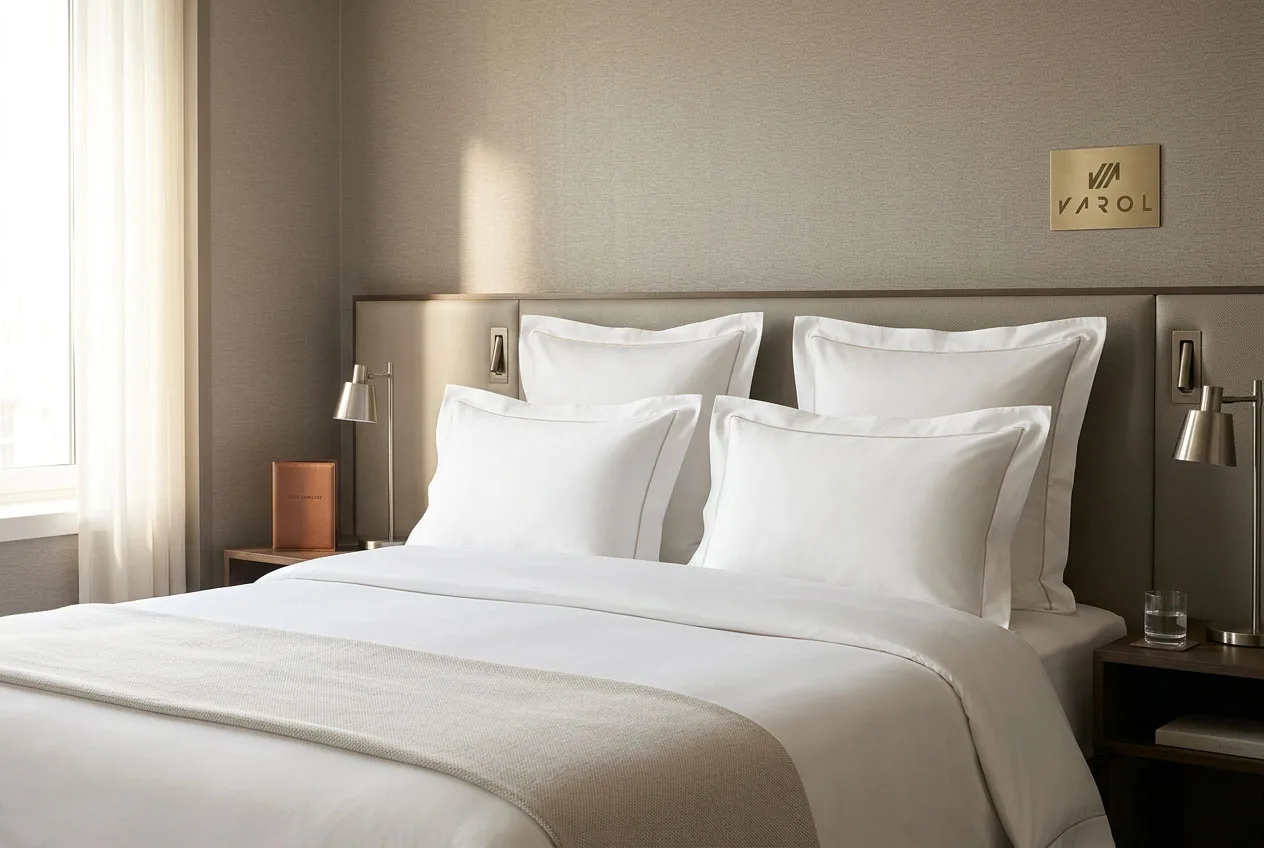
When choosing a duvet cover set, the first things most people notice are the pattern, color, or overall appearance. However, the main factor that defines the true character of the product is the fabric structure itself. Fabric type directly affects many aspects, from surface feel and comfort to breathability and post-wash performance.
For this reason, when selecting a duvet cover set, the decision should be based not only on visual preference but also on fabric type and intended use. This difference becomes even more apparent in areas such as hotels, serviced apartments, guesthouses, and institutional use.
The durability of duvet cover fabrics is a critical factor for long-lasting use in hotel textiles. To explore this subject in more detail, you can review our guide on why durability matters in hotel textiles .
To evaluate this topic within a broader framework, you can also take a look at our hotel textile guide page.
Quick summary: The most common structures found in duvet cover sets are cotton sateen, percale, patterned-striped textures, and cotton-polyester blends. Each offers different advantages in appearance, hand feel, and usability.
1. Why Is Fabric Type So Important?
Since a duvet cover set is a product that remains in contact for extended periods, the feel of the fabric is extremely important. Whether the surface appears matte or glossy, and whether the texture feels smoother or more natural, directly changes both the initial perception of the product and the overall user experience.
In addition, the fabric structure determines how the product looks after washing, how well it retains its form, and how suitable it is for daily or professional use. That is why choosing the right fabric is not only an aesthetic decision but also a performance decision.
2. What Is Cotton Sateen Duvet Cover Fabric?
Cotton sateen is one of the fabric structures that stands out for users seeking a smoother and more refined surface effect. Its surface appearance feels more uniform and more premium. It is especially preferred in upper-segment hotel rooms, suite concepts, and spaces where a more elegant bed presentation is desired.
Cotton sateen structures can also display different characteristics within their own category. While plain sateen offers a simpler and cleaner premium effect, striped sateen series create a more decorative surface thanks to their lined appearance. In series with a higher thread count and more refined yarn structure, the premium perception becomes even stronger.
The difference between plain sateen and striped sateen
Plain cotton sateen offers a calmer, more understated, and elegant appearance. Striped sateen, on the other hand, reinforces the more classic hotel look with stripe effects such as 0.5 cm, 1 cm, or 2 cm. This preference is more closely related to visual presentation and room concept.
3. What Is Percale Duvet Cover Fabric?
Percale fabric structure is a strong alternative for those who want a more matte, clean, and professional appearance. Its surface effect feels calmer and more natural. For this reason, it is frequently considered in spaces where a simple yet proper hotel linen appearance is desired.
The advantage of percale is that it can provide a quality and clean surface without being overly showy. It can be a suitable option for those who seek a more balanced, clear, and professional look rather than a shinier and more premium effect.
4. For What Purpose Are Patterned and Striped Fabrics Preferred?
In some duvet cover sets, the fabric is not limited to a plain surface. Striped or check-patterned structures create a more distinctive character in bed presentation. These types of fabrics attract particular attention in hotel projects that want to differentiate slightly from the standard white linen appearance.
Striped surfaces such as 0.5 cm, 1 cm, and 2 cm create line effects with different levels of intensity. Check-patterned structures, on the other hand, offer a more decorative and more distinctive surface character. Here, the choice is often related not only to usage purpose but also to the visual concept.
5. When Are Cotton-Polyester Blended Fabrics Preferred?
Cotton-polyester blended fabrics stand out in structures where operational ease and cost balance are important. They may be preferred especially in high-volume institutional purchases due to ease of care and a more controlled usage structure.
These structures generally appeal less to users who are seeking a fully premium surface feel, and more to projects that prioritize high-volume use and practical management. Therefore, aesthetic expectations and operational expectations should be considered together when making a selection.
6. Why Should Duvet Cover, Sheet, and Pillowcase Sizes Be Considered Together?
A duvet cover set does not consist only of the duvet cover size. When the sheet, pillowcase, and overall set structure are evaluated together, the product can be planned more accurately. Especially in hotel and institutional use, size standardization is an important part of the purchasing process.
Commonly used sizes are generally structured as follows:
| Product Group | Common Sizes | Note |
|---|---|---|
| Sheet | 160x240 · 180x280 · 240x280 · 280x280 | It may vary according to single or double-use structure. |
| Duvet Cover | 160x220 · 200x220 · 240x220 | It is selected according to bed size and set configuration. |
| Pillowcase | 50x70 · 50x70+5 | It may vary according to standard or flanged structure. |
| Set Structure | Single / Double | It is determined according to project and usage needs. |
If size planning is not done correctly, user satisfaction may decrease no matter how high the product quality is. For this reason, bed size, usage intensity, and set content should be considered together.
7. Which Fabric Type Is More Suitable for Whom?
Cotton sateen structures may be more suitable for users who want a more premium, smoother, and more elegant appearance. Those seeking a simpler, cleaner, and more professional look may consider percale fabrics. Patterned and striped fabrics, on the other hand, stand out in projects that want to make the visual character more distinctive.
Cotton-polyester blended structures can be considered in settings where high-volume use, operational practicality, and cost balance are the main priorities. There is no single correct option here; the right choice depends on the harmony between the intended use and the character of the fabric.
8. Conclusion
When choosing among duvet cover fabric types, not only appearance but also surface character, feel in use, operational structure, and size compatibility should be taken into consideration. Cotton sateen, percale, striped, patterned, and cotton-polyester fabrics appeal to different expectations.
The right product selection comes from matching the fabric type with the intended use. Especially in hotel and institutional projects, not only the fabric structure but also size standards and set content should be planned correctly.
Do you need manufacturer support for linen and duvet cover groups?
For hotel textiles, institutional supply, or bulk purchases, you can contact us regarding fabric structures, differences between series, and suitable size options.